
The Gir cattle is a famous dairy cattle breed originating in India. It is one of the principal Zebu or Bos indicus breeds in India, and has been used locally in the improvement of other breeds.
The native tract of Gir cattle is Gir hills and forests of Kathiawar. Which includes Amreli, Bhavnagar, Junagadh and Rajkot districts of Gujarat. The breed derives its name from the Gir forest, which is the natural habitat of the breed.
The breed is also known as some other names in different parts of their breeding tract. Such as Bhodali, Gujarati, Sorthi, Surti, Kathiawari and Desan.
Gir cattle is also very popular outside India. United States, Mexico, Venezuela and Brazil have imported this breed. And they are being bred successfully there. The breed was also one of the cattle breeds used in the development of the Brahman cattle in North America.
Specialties of Gir Cattle
Gir cattle are a treasure of Indian agriculture, possessing distinctive qualities and specialties. Their uncommon specialities make them an integral part of Indian cultural, economic, and agricultural factors.
Their adaptability, high milk production, cultural significance and some other factors have make them a unique, popular and high demand breed that continues to play a vital role in sustaining rural livelihoods and traditions. As efforts continue to preserve and promote this remarkable breed, Gir cattle remain a symbol of India’s rich agricultural heritage.
Gir Cattle Characteristics
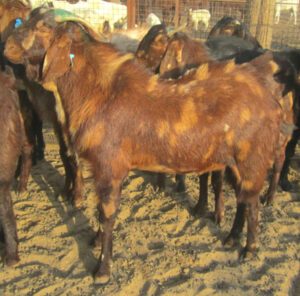
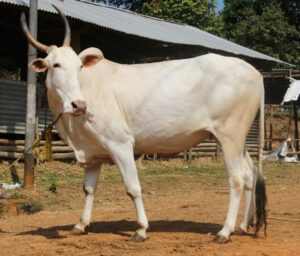
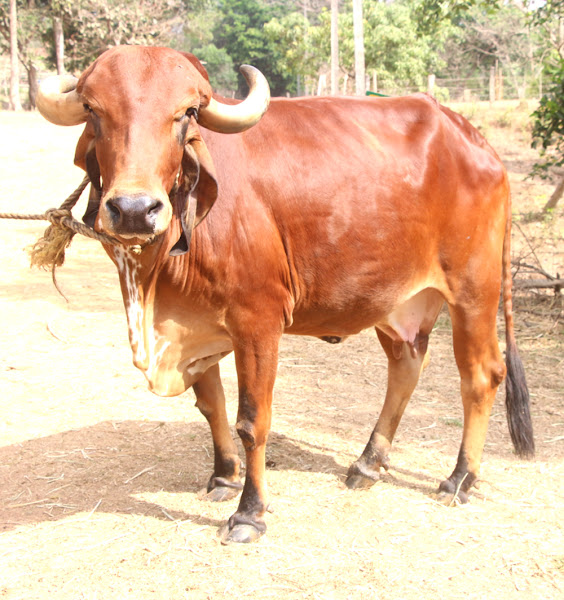
Gir cattle is distinctive in appearance and a heavy breed. Their body is well proportioned and the udder in cows is well developed and round. Their body color is shining red to spotted white.
Although, their body color can vary from pure red to speckles, yellowish red to white with large red spots. Their skin is soft, thin and glossy. They have a big head with prominent bulging sheild and a long face.
The convex forehead of Gir cattle is the most unusual feature of this breed. Their convex forehead acts as a cooling radiator to the brain and pituitary gland. Their ears are very long and are an excellent fly and insect swatter.
Their eyes are hooded and black pigmented and there are lot of loose skin around their eye area. They have very hard feet which is black in color. The horns of Gir cattle are set well back on their heads and thick at the base.
Their horns grow downwards and backwards with an upward curve. They have large hump. The average body weight of Gir bull is about 545 kg and 385 kg for cows. Photo from Wikipedia.
Temperament
Gir cattle are known for their docile and gentle temperament. They are easy to handle and work with, making them a preferred choice for small and large-scale dairy farmers. Their calm demeanor also makes them suitable for various agricultural tasks, including plowing and hauling.
Milk Production
One of the primary reasons for the popularity of Gir cattle is their exceptional milk production. They are renowned for being prolific milk producers with high-fat content in their milk.
On average, a mature Gir cow can produce 1200 to 1800 liters of milk per lactation cycle, with some exceptional individuals exceeding these figures. This makes them one of the most productive indigenous dairy breeds in India.
Gir milk is known for its high fat content, typically ranging from 4% to 5%. The rich and creamy milk is ideal for making ghee, butter, and other dairy products. This high fat content also adds to the nutritional value of the milk.
Gir milk is not only rich in fat but also contains essential nutrients such as proteins, vitamins, and minerals. It is an excellent source of nourishment for both the young and old, contributing to the overall health and well-being of consumers.
Adaptability
Gir cattle have evolved to thrive in the diverse climatic conditions of India. They are well-suited to the tropical and subtropical regions, where temperatures can soar during the summer months.
Their adaptability to varying environmental conditions and their ability to graze on diverse types of forage make them a preferred choice for dairy farming across India.
Disease Resistance
Another remarkable characteristic of Gir cattle is their resistance to various diseases and parasites. They have developed a robust immune system over centuries of natural selection, making them less susceptible to common cattle diseases. This natural resilience reduces the need for extensive veterinary interventions, making them cost-effective for farmers.
Longevity
Gir cattle have a relatively long lifespan compared to some other cattle breeds. With proper care and management, they can live up to 15 to 20 years or even more. This extended lifespan is advantageous for farmers as it ensures a consistent source of milk and other dairy products.
Uses
Gir cattle is a dairy cattle breed and mainly raised for milk production in India. But in some other countries, they are also raised for many other purposes such as cross breeding or genetic improvement of other breeds.
This breed has also been used locally in India for the improvement of some other native breeds. In some areas, farmers also use the bulls for many agricultural tasks.
Housing
Gir cattle housing or shelter plays a vital role in ensuring the health, comfort, and productivity of these valuable animals. You can contribute to the well-being of your Gir cattle herd and maximize their milk production potential by understanding their specific needs and implementing proper housing design and management practices.
A well-designed and well-maintained shelter is not just a place to house your cattle; it’s very important for successful Gir cattle farming.
Gir cattle are known for their adaptability to varying climatic conditions, whether it’s the hot and humid climates of India or more temperate regions.
Provide them with a spacious and well-ventilated shelter to protect them from harsh weather conditions, including extreme heat, cold, rain, and wind.
Ensure that each cow has enough space to move, lie down, and stand comfortably. Overcrowding can lead to stress and disease transmission. Proper ventilation is crucial to maintain air quality and prevent humidity buildup, especially in hot climates. Adequate airflow prevents respiratory issues.
Use non-slippery and comfortable flooring materials that are easy to clean. This helps prevent injuries and lameness. Provide natural lighting during the day and adequate artificial lighting during the night to promote cow comfort and productivity.
Design feeding and watering areas that are easily accessible for the cows. Ensure that water sources are clean and free from contamination. Designate separate areas for different purposes, such as feeding, resting, and calving, to minimize stress and improve cow management.
Feeding
Proper nutrition is the cornerstone of maintaining healthy and productive Gir cattle. By understanding their dietary needs and implementing sound feeding practices, you can ensure that your Gir cattle are healthy. Investing in their nutrition not only benefits the cattle but also contributes to the sustainability of your farming operation.

Breeding
Gir cattle breeding is both an art and a science, requiring careful planning, monitoring, and dedication. The aim is to preserve the breed’s unique characteristics while enhancing its genetic potential for milk production and overall health.
Right breeding practice is very important to preserve and enhance the unique characteristics of the Gir breed. Like many other cattle breeds, breeding these cattle is very easy and simple. Just keep good ratio of bulls and cows in your herd.
Caring
Proper care and management are essential to ensure the health and well-being of these majestic animals and maximize their productivity.

Special Notes
The Gir cattle is an important dairy cattle breed of India, and they are best known for their milking prowess. They are very hardy, and are famous for their tolerance to stress conditions and resistance to various tropical diseases.
Gir bulls are used for dragging heavy loads on all kinds of soil. They are very gentle and friendly in nature and love being with humans. They are very lovely and adore being scratched and brushed on their big dew laps, between the back legs and around the head.
The Gir cattle is very gregarious, and at night they form a circle very close together with their calves sleeping under their necks. It is a very popular dairy cattle breed in India.
And the average milk yield of a Gir cow is 1590 kg per lactation, with a record production of 3182 kg in India. The cows also perform very well outside India. In Brazil they produce an average of 3500 kg milk per lactation.
Average lifespan of Gir cattle is about 12-15 years. And a cow produce 10-12 calves during their lifespan. Review full breed profile of Gir cattle in the chart below.
| Breed Name | Gir |
| Other Name | Gir cow is also known by some other names such as Gyr Cow, Bhodali Cow, Gujarati Cow, Sorthi Cow, Surti Cow, Kathiawari Cow and Desan Cow |
| Breed Purpose | Mainly kept for milk production in India |
| Special Notes | Hardy, Friendly, Lovely, Loves Being with Humans |
| Breed Size | Heavy |
| Weight | On average bulls about 545 kg and cows about 385 kg |
| Climate Tolerance | All Climates |
| Skin Color | Their body color is shining red to spotted white. Although, their body color can vary from pure red to speckles, yellowish red to white with large red spots. |
| Horned | Yes |
| Milk Yield | Good |
| Rarity | Common |
| Varieties | Many |
| Country of Origin | India |