
Growing Sesame
Growing sesame of your own can be an excellent way for enjoying it, if you like to have sesame in your dish. Growing sesame is very rewarding and it's surprisingly fun! Commercial sesame farming is a very good business and you will make good profit if you follow everything perfectly.
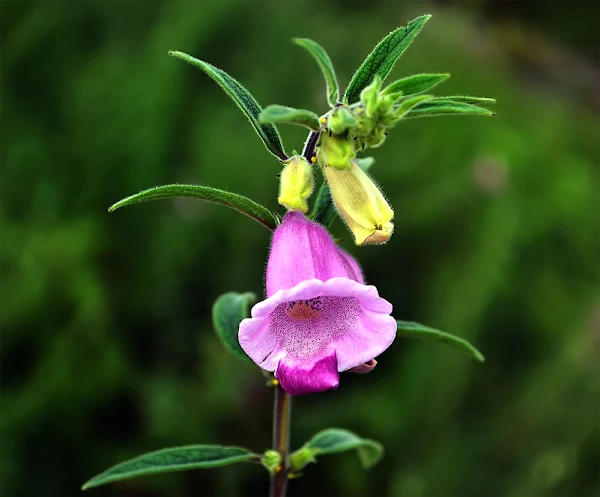
The sesame (Sesamum indicum) is actually a flowering plant in the genus Sesamum (also called benne). The plants are actually very beautiful with attractive dark-green leaves and have tubular flowers that can be of white or pale pink color. The mature plants can grow between 3 and 6 feet tall (depending on the variety).
The sesame is widely naturalized in tropical regions around the world. And the sesame is mainly cultivated for it's edible seeds, which grow in pods or buns. The Sesamum has many other species, most being wild and native to sub-Saharan Africa.
Sesame seed is one of the oldest oil seed crops known, domesticated well over 3000 years ago. It has one of the highest oil contents of any seed. The sesame seed oil has a rich, nutty flavor and it is a very common ingredient in cuisines across the world.
Origins
According to Wikipedia, the cultivated type of Sesamum indicum, originated in India. The sesame seed is considered to be the oldest oilseed crop known to humanity. Archaeological remnants suggest Sesame was first domesticated in the Indian subcontinent dating to 5500 years ago.
Other Names
The sesame is known by some other names in many different areas and languages. It is known as Til in Hindi, Assamese and Marathi, Teel in Bengali and Konkani, Tal in Gujarati, Ellu in Kannada and Malayalam, Rashi in Oriya, Thala in Sinhala, Ell in Tamil, Nuvvulu or NooPappu in Telugu and Edme in Tulu.
How to Start Growing Sesame
Growing sesame is not that difficult, and you can actually start growing sesame if you can follow all the steps very carefully. Here we are trying to describe more information about growing sesame.
Select a Good Location
First of all, you have to select a very good location for growing sesame. The sesame plants generally grow very well in well-drained soil which is fertile with neutral pH.
The sesame plants can do very well in dry conditions, but they can't tolerate water-logged conditions. And the plants require full sun for proper growth and maximum yield. So, consider all these factors while selecting location for growing sesame.
Prepare the Soil
The sesame plants are not picky about the soil types, and some varieties have adapted to many soil types. But they grow best in well-drained light to medium textured soil. The ideal pH level for growing sesame plants is between 5.5 and 8.0. Acidic or alkaline soils are not suitable for growing sesame.
For preparing the soil, 1-2 ploughing will be required (one deep ploughing) with 2-3 cross harrowing. Apply all the organic and chemical fertilizers during this time. For commercial production, add 10-12 kg urea and 40-50 kg super phosphate per acre. And apply MOP if deficiency observed.
Climate Requirements for Growing Sesame
The sesame is a tropical crop that requires hot conditions during the growth period. Frost conditions, heavy rains or prolonged drought are not good for sesame cultivation. Extreme low and very high temperatures can effect the growth. The ideal temperature for growing sesame is between 25 °C and 35 °C.
Best Time for Growing Sesame
Commercial sesame production require 90 to 120 frost free days. Kharif season is good for growing sesame in the arid and semi-arid tropics. And Rabi or summer season is good for growing sesame in cooler areas.
Choose a Variety
There are many different sesame varieties available in many different parts of the word. But you should choose the variety which is easily available in your area.
Some improved or hybrid sesame varieties are SVPR-1, VRI-1, VRI-2, CO-1, TMV-3, TMV-4, TMV-5, TMV-6 and TMV-7. Consult with an existing farmer or an agriculture specialist in your area for having good recommendation for choosing good variety.
Purchase Seeds
After choosing a variety, purchase good quality seeds from any of your nearest markets. The sesame is a common crop, and the seeds should be easily available within your area. You can also consider ordering the seeds online.
Seeds per Acre
The sesame seeds are very small in size, so you will require less seeds as compared to many other crops. Generally 2-2.2 kg seeds will be enough for one acre.
Planting
Planting seeds in rows will be very good instead of scattering the seeds throughout the land. Space the rows to about 10-12 inches apart. Mix the seed with dry sand and spread the mixture along the furrows for ensuring even distribution (mix 1 time seed with 4 times dry sand). Sow the seeds to about 1/2 to 2/3 inch deep. Cover the seeds with soil after sowing, and water the soil lightly.
Before sowing the seeds, treat them with Bavistin at the rate of 2 grams per kg seed. You need to do so for preventing seed brone diseases. You can thin the seedlings to about 4-6 inches apart when they are about or up to 4 inches tall.
Caring
The sesame plants generally require less care as compared to many other commercial crops. But taking additional care is recommended. Because taking additional care of the plants will ensure good growth of the plants and you can expect to have a good yield. Here we are describing more about the additional caring steps for growing sesame plants.
Fertilizing: In most cases, you don't have to provide additional fertilizers for growing sesame plants. Your plants will grow just fine if you have prepared the soil by following the systems mentioned above.
Watering: Regular and adequate watering is very important for the proper growth of the sesame plants. Timely and adequate irrigation also affect total production. Irrigate the soil for the first time immediately after sowing the seeds. And provide additional irrigation after 1 week of sowing the seeds, depending upon the soil type and climatic condition. Once the seeds germinate, you need to provide irrigation 3 times in 3 critical stages. The first one should be done at pre-flowering stage, the second one at flowering stage and the last one at pod setting stage. Stop watering totally, 65 to 70 days after sowing the seeds.
Controlling Weeds: Weeds consume most of the nutrients from the soil. So controlling them is very important. You should take first step for controlling weeds while preparing the soil. Then additional weeding is required 15-25 days after sowing the seeds. And finally another one at 15 to 20 days after first weeding.
Pests and Diseases
Pests and diseases are generally less in the sesame plants. Caterpillar and gall fly are the common and main pests you will notice while growing sesame plants. Please consult with an experienced farmer in your area or contact your nearest agriculture extension office for more help for controlling all these pests and diseases.
Harvesting
The sesame seeds become ready for harvesting within 3-5 months after planting the seeds (exact time depends on the variety). But in most varieties, you can expect to harvest when the leaves, stems and capsules begin to turn yellow and the lower leaves of the plant start shedding.
Don't wait until the crop becomes dead ripe (because it will cause the shedding of the seeds. The ripe sesame plants should be cut at the ground level and should be stacked for 7 to 10 days in sun for making them ready for the threshing process.

Yield
Total yield always depends on the variety you choose, and also on good farm management practice. You can expect between 200 and 500 kg per hectare in Kharif crop. And 300-600 kg per hectare in summer or robi crop.
Uses of Sesame
The sesame seeds are used in many different ways. They can be eaten either raw or toasted or in many other ways. The seed is used whole in cooking mainly for it's rich, nutty flavor. The seeds are sometimes added to breads, including bagels and the tops of hamburger buns. The sesame seed's oil is also popular in many countries. However, the uses of sesame seeds are actually many.
Sesame Nutrition
100 grams dried whole sesame seeds provide about 573 calories and are composed of 5% water, 12% dietary fiber, 18% protein, 23% carbohydrates and about 50% fat. The whole sesame seeds are rich in several vitamins and minerals.
Health Benefits of Sesame
Consuming either the oil or whole sesame seeds has many health benefits. Some notable health benefits of consuming sesame seeds are listed below.
- The sesame seeds are very good source of protein, fat, minerals and vitamins.
- Consuming the seeds or oil on a regular basis can help in lowering cholesterol and reducing blood pressure.
- Consuming sesame regularly will help in digestion and it also helps to prevent diabetes.
- Consuming the seeds or oil help in alleviates anemia.
- The seeds can protect your liver from alcohol.
- Consuming the sesame seeds or oil regularly will help in bone health (and prevent osteoporosis), and also help in preventing wrinkles.
That's all! Hope you have learned a lot about sesame farming business, and we hope you will be able to make good profit this time. Good luck!
 Reviewed by Tanmoy Roy
on
October 26, 2018
Rating:
Reviewed by Tanmoy Roy
on
October 26, 2018
Rating:
Post a Comment