
African Pygmy Goat

Pygmy goats are considered as the best miniature dairy goat breed. African pygmy goat is a native goat breed of West Africa. They were originated from the Cameroon Valley of West Africa. They were shipped to the USA during the late 50s.

Like the small sized pygmy goats, African pygmy goats are also good milkers. They also produce huge amount of milk, compared to their body size. Nowadays most of the farmers keep these goat breed mainly for their highly milk production capability.

One doe can produce about 4 lbs of milk daily, during their lactation period. They are also good for meat production. And some people also raise them for meat production purpose. Some people also raise these African pygmy goat as pets.

They are well behaved and also very friendly with humans. Through proper care and management, they can produce their maximum. Here we are describing more about their appearance, habit, diet, temperament and breeding. Read more information about the African Pygmy goat below.

Physical Characteristics of African Pygmy Goat

Like all other goat breeds, male African pygmy goats are called bucks and females are called does. On an average, an adult African pygmy goat heights around 16 to 23 inches. A male goat weights about 27 to 39 kg and females weight around 24 to 34 kg.

African pygmy goats come with dark caramel, red caramel and white caramel color. You can also see some light-grey agouti, dark-grey agouti and medium-grey agouti colored African pygmy goat.

Housing

Like other goat breeds, they are also very smart and curious. For raising African pygmy goats in a barnyard, you will need good ventilated and draft free housing system. They don't like cold and rain.
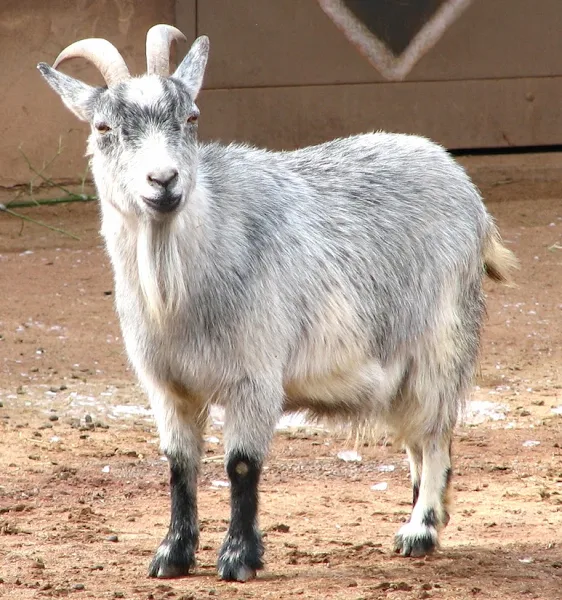
african pygmy goat, pygmy goat

You will require tall and strong fence around your farm area to keep them safe inside and for keeping all types of wild animals and predators out.

Don't use barbed wires for making fence for them. They always require enough space to wander around. Use concrete floors with high wooden platforms for them.

Feeding

Feeding system for African pygmy goat is about the same like all other domestic goats. Feed them little grains (at least 3 times a week) with sufficient amount of greens. You can provide them all types of vegetables, fruits, leaves or other types of greens.

Alfalfa, alfalfa cubes and prairie hay are also good for them. Houseplants, bulb plants, onions, oleander and rhododendrons etc. are harmful for African pygmy goat. So remove these type of plants from your garden or pasture.

Temperament

African pygmy goat is very friendly and docile in nature. They are also very curious, playful and intelligent. They are very good as pets. You can consider some African pygmies as pets along with their milk production.

Breeding

On an average, African pygmy goat has more than one reproduction cycle each year. After successful breeding, the gestation period stays for about 151 days. An African pygmy doe can produce about 1 to 4 kids after every 9 to 12 months.

Female pygmies gain maturity and become suitable for breeding within their 12 to 18 weeks of age. There are no specific breeding time for this goats. Female pygmies capable of conceiving at 2 months of age as well. Usually they can survive for about 8 to 12 years.

Some Important Facts About African Pygmy Goat

African pygmy goats are absolutely very cute, lovable and very playful. Here are some important facts about this goat.

  • In the Middle Eastern countries, African pygmy goats have been tamed for about 10,000 years now.
  • African pygmies have similarity with Nigerian dwarf goats. Nigerian dwarf goats are another best miniature dairy goats.
  • African pygmies are good milkers. They can lactate from 6 months to 10 months. And they produce good amount of milk, compared to their body size.
  • Like other bucks, African pygmy bucks have an odor. But they have less offensive livestock odor, if the does are kept away from the bucks. Bucks have scent glands between and behind their horns and have tiny scent glands at various locations around their body. And bucks tend to urinate on their beards and sometimes front legs.
  • African pygmy does have short and straight horns, compared to the bucks.
  • These goats can survive well in various conditions. Even they can survive in such location where foods are very less. They can jump and climb splendidly.
  • They don't like and drink dirty water. They always drink fresh water (otherwise they won't drink water at all).
  • They are very playful and friendly with humans.

Review full breed profile of the African Pygmy goat in the following table.

Breed NameAfrican Pygmy
Other NameNone
Breed PurposeMilk, Meat, Pet
Breed SizeSmall
BuckAbout 27-39 kg
DoeAbout 24-34 kg
HornsYes
Climate ToleranceAll Climates
Coat ColorMany
Good for Stall FedNot sure
RarityCommon
Country/Place of OriginCameroon

Comments

Popular Posts

Murray Grey Cattle

The Murray Grey cattle are a breed of beef cattle from Australia. It was developed in the upper Murray River valley on the New South Wales. The breed was developed in 1905 from an initial chance mating of a black Aberdeen Angus bull and a roan Shorthorn cow during the Federation drought. From these matings the resulting thirteen dun-grey calves were kept as curiosities. And then Peter and Ena Sutherland bred them on the Thologolong property along the Murray River in New South Wales. Murray Grey cattle grew faster and were good converters of feed and produced quality carcases. These are the reasons this animals become very popular after their development. And local farmers became interested soon in these animals and began breeding them. The first large scale commercial farms were established in the 1940s. Today the breed is available in many countries. Both live Murray Grey cattle and embryos have been exported to many countries such as Canada, South America, New Ze...

Sorting Cattle

Sorting cattle is important if you have a large number of animals. For better management you will need to separate the animals into different groups depending on their age, size, gender or condition score. If some cattle of your herd need to be examined by a veterinarian or confined due to injury or illness, then separation may also need to be done. Sorting is also needed for separating the calves that need to be weaned from their mothers. And separating the bulls is also necessary after they have done their duty with breeding cows. Sorting Cattle Sorting cattle is not actually a difficult task. It can be done easily if you understand stockmanship principles that take advantage of bovine psychology and behavior. However, here we are describing more about the ways of sorting cattle. Sorting From a Squeeze Chute In this system you can move your cattle through a working corral into a chute system into the squeeze. In this system you can check and process animals f...

Andalusian Black Cattle Farming

Andalusian Black cattle farming is not too popular, even in it's native area. It is a relatively rare breed which is valued for meat production. But today, the breed is listed as 'endangered', and total number of the breed is very less. The Andalusian Black cattle is a taurine cattle breed, and it was originated in west Andalusia, Spain. It is also known by some other names such as Negra de las Campiñas, Negra Campiñesa and Spanish: Negra Andaluza. The Andalusian Black cattle is actually a beef cattle breed which is raised primarily for meat production purpose. The breed is found in two main areas of west Andalusia (from Cordova to the foothills of the Sierra Morena), and in the provinces of Seville, Cádiz and Huelva. Today, total population of the Andalusian Black cattle breed is very less. And there were about 800 purebred cattle in the year of 2007. Total number of this breed decreased mainly for crossbreeding with other local cattle breeds. Other reason...

Belted Galloway Cattle Farming

Belted Galloway cattle farming is popular, especially in it's native area. It is a beef cattle breed and raised mainly for meat production purpose. The breed is also known by some other names such as Beltie, Oreo Cow and Panda Cow. The Belted Galloway cattle breed was originated from Galloway in the west side of Southern Scotland. It is a heritage breed, and is well adapted to living on the poor upland pastures and wildswept moorlands of the region. Exact origins of the breed are unclear. But it is often surmised that the white belt of the breed may be a result of cross breeding with the Dutch Lakenvelder belted cattle. And the breed is named so mainly because of the belt. An association for the breed named the Belted Galloway Association was formed in 1921 in Scotland. And the name of the association was changed to Belted Galloway Society in the year of 1951. The association keeps and records pedigrees for Belted Galloways and oversees the registration of White and Re...

Cleaning A Cow

Cleaning a cow in the proper way can keep the animal look and feel fresh. Cleaning also help to prevent external parasites. You may also need to clean your cow to show it off at your local county fair or other occasions. And you need to clean your cows more often especially if you have dairy cows. You can integrate a spraying system for cleaning a cow once a day or so. Along with cleaning the body, you should also provide a footbath for better health of the cow's hooves. However, here we are describing more about the process of cleaning a cow. Sprinkler System Add Sprinkler in a Pre-milking Wash Pen You can construct a pre-milking wash pen with sprinklers for cleaning multiple cows. In this system, install sprinklers all along the pen you hold the cows in before milking. Using concrete for the floor will be good. It will help to keep the floor dry quickly and you will not have a constantly muddy area. You should spray sprinklers both up and down to wash the cows th...

Agerolese Cattle Farming

Agerolese cattle farming is not common, even in it's native area. It is a dairy cattle breed which is raised mainly for milk production purpose in it's native area. It is a pretty rare breed and not available outside it's native area. The Agerolese cattle is actually from the area of Agerola, in Campania in southern Italy. It was developed from cross-breeding of indigenous Podolica cattle with Bruna Italiana, Italian Holstein-Friesian and Jersey cattle. The breed is particularly associated with the Sorrento Peninsula and Monti Lattari. The Agerolese cattle is one of the 16 minor Italian cattle breeds of limited diffusion recognized and protected by the Ministero delle Politiche Agricole Alimentari e Forestali, the Italian ministry of agriculture. There were a total of 200 animals available according to a census completed on 1 January 2002. And the conservation status of the Agerolese cattle breed was reported by the FAO as 'endangered-maintained' in 200...

Ankole-Watusi Cattle Farming

Ankole-Watusi cattle farming is pretty popular, especially in it's native area. It is a multi-purpose breed of domestic cattle which is raised and valued for show, draught, meat and milk production purpose. The Ankole-Watusi cattle is a landrace breed, a type of Sanga cattle and originally native to East Africa. It is also known as Ankole Longhorn, and also sometimes known simply as Ankole or Watusi. Ankole-Watusi cattle is actually an ancient breed, and ancient rock paintings and depictions of these animals have been observed in the Sahara region and in the Egyptian arts and pyramid walls. The Sanga breed has spread to the Sudan, Uganda, Kenya and some other parts of Eastern Africa, becoming the base stock of the indigenous African cattle populations. It has most of the usual Zebu characteristics such as the pendulous dewlap and sheath, hump of variable size and the upturned horns. The Ankole-Watusi cattle have played a very important role in the lives of various ...