
Stall Fed Goat Farming
Before detailed discussion, let me first explain 'what is stall fed goat farming system'? Stall fed is such a goat farming system where goats are kept inside the shed or house and not allowed to graze outside. Inside the shed or house, the goats are cared and kept separated depending on their age, breed, sex and weight.
Stall fed goat farming system is becoming popular day by day. It's pretty new system and has many advantages compared to traditional goat farming system. High profit, fast growth, less care etc. are some main advantages of stall fed goat farming system.
If you are planing for starting a goat farm project in a controlled but professional manner, then stall fed goat farming system is the most practical and the best system to follow. Here we are trying to discuss more about stall fed goat farming system.
Why Stall Fed Goat Farming Method
Before discussing more about stall fed goat farming method, we are describing some advantages of this goat farming system.
- Easy to care and require less space.
- Better collection and utilization of manure. You can properly collect and utilize the manure for producing greens or crops (or use for any other purposes).
- Quantity and Quality of Feed can be differentiated according to the Stage and Nutritional Requirement of different age groups of goats.
- You can prevent unwanted mating which ensures proper breeding and production.
- You can keep your farm's record easily.
- Wastage of energy during grazing is avoided.
- Diseases are less. Disease transmission is prevented from outside animals and outside plants. And better control and reduction of parasitic re-infestation.
- In stall feeding goat farming system goats are free from harmful and wild animals and predators.
- Overall, goats gain better body weight, grow healthier and become more healthy and farmers can gain more profit in stall fed goat farming system compared to grazing or traditional goat rearing system.
How to Start Stall Fed Goat Farming
Stall feed goat farming system is most suitable for meat production purpose. That means, this system makes more profit if you plan for commercial meat production business. Here we are describing about the starting process of stall fed goat farming system.
Breed Selection
In stall fed goat farming system, you have to select those goat breeds which are highly meat productive. Boer, Spanish, Kiko, Pygmy, Black Bengal, Sirohi, Frisian etc. are some meat producing goat breeds and are suitable for stall fed goat farming system.
Whichever breeds you select, don't forget to select and purchase disease free and quality goats. It will be better if you can purchase does aged between 5-15 months and bucks aged between 5-7 months.
Always try to purchase animals from other farm near your area. In case of purchasing from any livestock market, be wise and monitor goat's health and all other related aspects perfectly.
Housing
An adult goat needs about 10 square feet housing space in stall fed goat farming system. The house can be build of either wood, bamboo or concrete. Make proper facilities for cleaning the house. If possible make a drain inside the house.
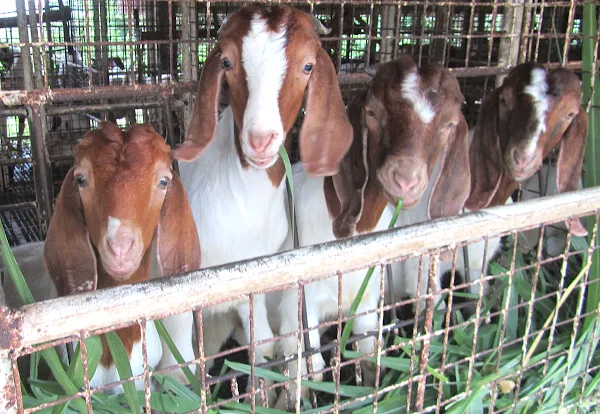
Make big windows so that fresh air can flow inside the house during summer. Cover the house at night with hessian during the winter season and keep some straw, hay or wood shavings in the floor for providing warmth.
Making the Goats Accustomed to Stay Inside House
Don't keep the goats inside the house for all the day after purchasing. For the first time, let the goats graze in the field 6-8 hours daily and keep them confined for rest of the day and provide them sufficient food and clean water.
Do this for 1-2 weeks and gradually decrease grazing time. And then your goats will be accustomed inside house. But if your goats are used to stay inside the house after their birth then this method is not necessary (you can easily raise them in stall feeding system).
Caring Kids
Clean the body of kids after their birth and immediately feed them colostrum (mother's first milk). Colostrum is highly nutritious and very effective for kids. If anyhow you can't feed colostrum, then you can use colostrum replacer which is available in the market.
You have to feed the kids 10-12 times a day for the first few days or week. Clean and sterilize feeder, nipples or other required feeding equipment with boiled hot water. A goat kid with 1-1.5 kg body weight needs about 250-350 grams milk daily.
Increase the amount of milk according to their body weight. You can wean the kids after 2-3 months. Start introducing greens and supplementary feeds when the kids reach one month of age.
Feeding
Goats usually eat 4-5% food daily of their total body weight. Ensure 60-80% of their daily foods are containing fiber (grass, leaves, hay etc.). And provide them 20-40% supplementary goat feed.
A growing castrated buck needs about 1-1.5 kg green feeds and 200-250 gram supplementary feed daily. A doe about 25 kg body weight with 2-3 kids will need about 1.5-2.5 kg greens and 350-450 grams of supplementary feeds daily.
An adult breeding buck needs about 1.5-2.5 kg greens and about 200-300 grams of supplementary feeds daily. Here is the general mix of supplementary goat feed for stall fed goat farming system.
| Feed Ingredients | Percentage (%) |
| Broken Rice/Wheat/Maize | 12.00 |
| Flour, Wheat/Rice Bran | 47.00 |
| Pea Bran | 16.00 |
| Soybean/Sesame/Coconut/Mustard Cake | 20.00 |
| Dried Fish Powder | 1.50 |
| Dicalcium Phosphate | 2.00 |
| Salt | 1.00 |
| Vitamin Mineral Premix | 0.50 |
| Metabolic Energy (MJ/kg) | 10.00 |
| Metabolic Protein (grams/kg) | 62.00 |
Cultivate Grass For Goats
Grasses are best source of greens for goats. If you cultivate grass in your own land, then it will decrease feeding cost and increase the quality of your goats.
Alfalfa, Bahiagrass, Bromegrass, Clover, Fescue, Millet, Ryegrass, Timothy etc. are considered as the best grass for goats. Napier, Splendida, Andropogon etc. are also some highly productive grass and suitable for goats which are raised in stall feeding system.
You can cultivate any of the above grass in your land which will provide you continuous grass supply throughout the year. If possible, cultivate various types of grasses.
Doing this will make a variety in your goat's regular diet. In stall fed goat farming system, you can also feed your goats hay mixed with urea and molasses. Read what to feed goats in stall feeding system for details.
Caring Breeding Bucks
Keep enough buck in your farm for breeding purpose. Usually, 1 buck is sufficient enough for breeding 25+ does. Castrate other bucks in your farm which are not necessary for breeding purposes.
Castrate the bucks within 2-4 weeks after their birth. You can feed your breeding bucks with greens only when you are not using them for breeding. But during breeding time provide them 200-500 grams of supplementary feeds (may vary depending on the goat breeds) daily along with sufficient amount of greens.
Germinated chickpeas is very effective for breeding bucks. You can feed your buck about 10 grams of germinated chickpeas daily. Don't let your breeding bucks become fatty.
Health Management
Deworm the goats twice a year (once at beginning of rainy season and another at the beginning of winter season). Vaccinate them timely and keep contact with a veterinarian in your area.
Vaccinate the goats for Enterotoxemia after 3 days of birth (1st dose) and after 15-20 days of birth (2nd dose). Vaccinate for PPR at their age of 4 month and vaccinate for goat pox at the age of 5 months.
Diseases and other health problems can be solved by proper care and treatment.So, always try to take good care of your goats.
Other Management
Always bring healthy and disease free goats in your farm. If you bring new goats in your farm, then keep the goats separated for 15 days and take proper care.
Introduce the new goats with other goats in your herd after keeping them separated for 15 days. If you notice the new goats are healthy and diseases free, then vaccinate them PPR vaccine after 15 days and introduce them with the herd.
If there are any infected goat in your herd, then separate the infected goat as soon as possible and take extra care. Clean the goat house on a regular basis. Wash the goats with 0.5% malathion solution after every 5-6 months. This will keep the goats free from skin diseases.
Breeding Management
Does/female goats become suitable for breeding within their 7-8 months of age (when they reach 12-13 kg body weight). Introduce the does with bucks when they are in heat (usually, after 12-14 hours).
For example, if the heat period starts in the morning, then bring her to the buck at the afternoon. After successful breeding, the does become pregnant and give birth of kids after 142-158 days. Always choose healthy and disease free bucks for better result in goat breeding.
Marketing
In proper care, quality feeding and good management the goats become suitable for marketing within their 12-15 months of age (may vary depending on goat breeds). You can sell either live goats or goat meat. Set your marketing strategies before starting the farm.
Hope this guide has helped you. Consider sharing it with your friends and family members if you find it helpful. Good luck and may God bless you!
 Reviewed by Tanmoy Roy
on
October 27, 2013
Rating:
Reviewed by Tanmoy Roy
on
October 27, 2013
Rating:
Post a Comment