
Peacock Farming
Peacock farming is not a new business idea. Rather, it is an old practice and many people are raising peafowl from a very long time ago. People raise various types of poultry birds for the purpose of producing meat, eggs, and also for their beauty. But peafowls are not raised for meat or eggs, rather they are raised for their beauty.
Peafowls are very useful to farmers and they help them by eating harmful insects, snakes etc. They are very helpful for nature. Raising various types of poultry birds is one of the best and lucrative business ventures. Peafowl production is also very profitable. But they are not used for meat or eggs. Mostly they are raised as pets, for their beauty and also for enhancing the beauty of a property.
Some people also raise peafowls as a hobby and for entertaining purpose. Raising peafowls is very pleasuring. However, peacock farming is just like raising other poultry birds such as chicken, ducks, geese, turkey, quail, swan etc. And raising them is very easy and simple.
What Are The Economic Importance of Peacock?
The Indian and Burmese peacocks are considered as the most beautiful birds. Peacocks are very beautiful and their feathers attract almost all types of people. Peafowls are good to watch. They are very entertaining, and it's very pleasuring to monitor their activities. So, showing peacock can be a good business.
Generally, peafowls are not raised for their meat or eggs. But they are highly valued in the market. They are among the highly priced birds. For this reason peacock farming is absolutely very profitable like pigeon, chicken, ducks and other poultry farming business.
Peacock features also have huge demand and value for decorating houses. A general person who has never seen any peacock yet, is also a fan of their feathers. Peacock features have a great popularity internationally. Many luxurious shop sell peacock features, due to it's high demand and popularity.
Commercial peacock farming is not too popular yet. Right now, you can see peacocks in a few farms and in the zoo. In India peacocks are highly available both in the wild and in commercial farms. Peafowls are suitable for commercial raising both in the town and village areas. Contact with your nearest wild life service centers and learn whether commercial peacock farming is permitted in your area or not.

What Are The Important Features of Peacock?
The peacock has iridescent blue-green or green colored plumage. Head, neck, van and throat protector is little blue colored. Both peacock and peahens have crest atop the head. Their legs are reddish.
They have very attractive tail and they use their beautiful tail for attracting the peahens. You can see 'eyes' on their tail, when they fan their tail. Peacocks dance raising their tail plumage to attract peahens, which is very impressive and mind blowing.
Peacocks always love to stay in a group. Usually you will see 1 peacock with 5 to 6 peahens in a group. In the wild peacock move over the ground for a short period, most of the time they stay upon the large trees. Grains, insects, snakes, small fish, frogs, etc are their favorite food. Peahens lay about 3 to 5 eggs by making a small hole in the ground. The eggs are off white colored.
And it takes about 27 to 30 days for hatching their eggs. Average life expectancy of peafowl is around 35 years. They reach sexual maturity at their 3 to 4 years of age.

What Are The Advantages of Peacock Farming Business?
Commercial production of peafowl has many benefits or advantages. Here we are trying to describe the top advantages of starting commercial peafowl farming business.
- The main benefit of peafowl farming is 'it is very pleasuring'. Peafowls are very beautiful birds and watching their activities is very mind refreshing.
- You will be able to start small scale peafowl production with little investment.
- Return of invest ratio is very high. You will be able to make good profits from your business.
- You can utilize your backyard and make some extras.
- Like other poultry birds, peafowls don't require much caring and other management.
- Peafowls and their products have huge demand and value in the market.
- Commercial peafowl production can be a great employment source for the rural people. Especially for the unemployed educated young people.
How to Start Peafowl Farming?
Starting a commercial production of peafowl is relatively easy and simple. If you want to raise peafowl on your property, then you have to feed them nutritious foods and make a suitable environment for them. Peafowls are omnivorous, their regular includes wheat, rice, vegetables, seeds, insects, snails etc. Papaya, melon and other fruits are also their favorite food. Along with providing nutritious food, you have to supply sufficient amount of fresh and clean water daily.
Starting large scale peacock farming is relatively easy. Here we are trying to list the steps and describe more information about starting commercial peafowl farming business.

Step 1: Learn Practically
First of all, try to learn practically about raising and caring these birds. Peafowls are very strong and hardy and they are just like many other domestic poultry birds. Although, having practical knowledge about their caring will help to raise them perfectly. You can learn practically from an expert or from any existing farm in your area.
Step 2: Complete a Training
Peacock farming requires some basic skill and knowledge. That's why it is essential for beginners to receive adequate training before starting this venture. You need to understand the behavior, health requirements, breeding patterns, and feeding habits of peacocks to ensure their good health and maximize their productivity. You can complete the training from various sources, including universities, agricultural extension offices, and private training institutes. Some organizations and government agencies also offer training and support for peacock farmers.
Step 3: Make A Business Plan
Like many other farming business, a successful peacock farming business also require careful planning and preparation. So, try to make a very good business plan that includes the business goals, target market, and financial projections. You can ask for help from an expert if you are new in this venture.

Step 4: Select a Good Location
Choosing the right location for your farm is very important for successful peacock farming business. Peacocks require a specific environment that meets their housing, feeding, and behavioral needs. They are adaptable birds that can live in a range of climates. But, extreme weather conditions, such as heavy rain, snow, or high temperatures, can be harmful to their health. So, you have to consider the climate of the location and ensure that it is suitable for peacocks. Also consider security, marketing and other facilities are available in your selected land. And ensuring all these is very important.
Step 5: Select Good Peacock Breed
Selecting the right breed is also very important. Indian Blue Peafowl is the most common breed. But there are also many other breeds to choose from. Here we will discuss the different peacock breeds that are commonly found in farms around the world.
Indian Blue Peafowl: The Indian Blue Peafowl is the most commonly found peacock breed in captivity. It is native to India, Sri Lanka, and Pakistan and is known for its striking blue and green plumage. The male (known as the peacock) has a long train of feathers that are displayed during courtship displays. The female (known as the peahen) has a shorter tail and is less vibrant in color.
Green Peafowl: The Green Peafowl is native to Southeast Asia. The male has a shorter train than the Indian Blue Peafowl but is more colorful with metallic green and blue feathers. The female has a brownish-grey plumage with green and gold feathers.
Congo Peafowl: The Congo Peafowl is native to central Africa. Is smaller in size than the Indian Blue and Green Peafowl. The peacock has blue and green plumage with a distinctive white belly. The peahen has a brownish plumage with black and white feathers.
White Peafowl: The White Peafowl is a rare breed that is bred for ornamental purposes. It is a genetic mutation of the Indian Blue Peafowl and has white plumage with a hint of blue or green around the neck. The males have a long train of feathers, while the peahens have a shorter tail.

Spalding Peafowl: The Spalding Peafowl is a hybrid breed. It is a cross between the Indian Blue Peafowl and the Green Peafowl. It has a striking plumage that combines the colors of both breeds, with metallic green, blue, and bronze feathers. The peacock has a long train of feathers. And the peahen has a brownish-grey plumage.
Step 6: Learn Peafowl Behavior
Understanding the behavior of peacocks is very important for their proper care and management. They are social birds and live in groups called "parties" or "prides." And a party can consist of several males and females. The males often compete for dominance within the group and the dominant male is known as the alpha male.
The male peacock displays his colorful feathers in a courtship display during the mating season to attract the peahen. The male fans out his tail feathers and spreads them wide, creating a fan-like display. He also makes a series of calls, including a loud, high-pitched whistle and a low, deep drumming sound, to attract the female.
Step 7: Purchase Birds
Purchase good quality and healthy birds from local breeders or suppliers. Keep in mind the age, health condition of the birds.
Step 8: Purchase Equipment
Like many other poultry birds, raising peafowls also require some equipment. So, purchase these equipment for making the caring process much easier. Here is the list of required equipment:
- Enclosures/Pens
- Shelter
- Nesting Boxes for Peahens
- Feeders
- Waterers
- Perches
- Incubators
- Brooders
- Cleaning Supplies
- Medical Kit
- Identification Bands
- Record-keeping Tools
- Transport Crates
- Perimeter Security
- Supplements
- Artificial Lighting

Step 9: Provide Good Housing
Housing is an essential component of peacock farming, as it provides the birds with shelter and protection from the elements and predators. Peacocks require adequate housing that meets their specific needs, including space, ventilation, and nesting areas. And try to clean the house on a regular basis. Like many other poultry birds, peafowls also require adequate space to move around, exercise, and spread their wings. Provide them at least 8 to 10 square feet of space per bird.
Step 10: Ensure Nutritious Feeding
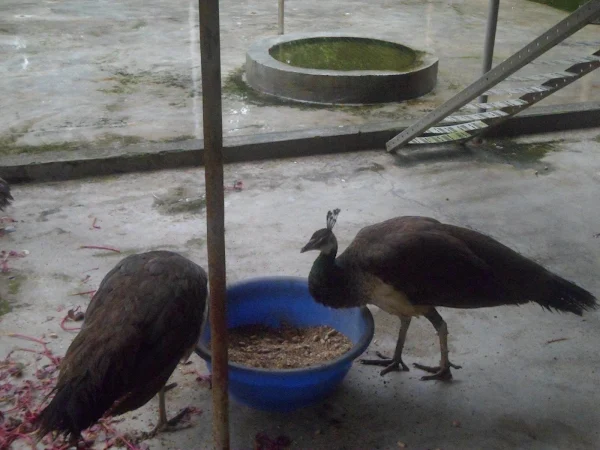
Providing the birds with very good quality and nutritious food is the most important part of peafowl farming business. Peafowls are omnivorous. They eat almost everything whether any plant or animal matter. Wild figs, berries and nuts are favorite foods in season, but seeds, grain and leaves are staple items all year. They also love to catch and eat mice, frogs, small snakes, various types of small mammals, various types of insects such as ants, grasshoppers, termites etc.
Peafowl don't drink water frequently like other domestic poultry birds. Usually they drink water during their midday rest and while eating in late afternoon. They drink again just before going to roost. You can also feed your peafowl a wide range of crops and fruits such as bananas, chilly, groundnut, paddy, tomato etc. If you have any peachicks, you can feed them turkey starter feed, boiled chicken eggs etc.
Actually, feeding peacocks is a very important part of peacock farming business, as it provides the birds with the essential nutrients they need to maintain good health and productivity.
Step 11: Proper Breeding is Also Important
Usually peafowl's breeding season starts with the monsoon. There are some advantages of mating during this season. Peachicks benefit from the abundance of food resulting from the rains. Peacocks show their trains and dance for attracting the peahens. Each peacock mate with 5 to 6 peahens in his group during this season.
After successful mating, peahens lay eggs. Usually it takes about 27 to 30 days to hatch their eggs. Peacock breeding is an essential component of peacock farming, as it provides a means of propagating the species and producing offspring that can be raised for meat, feathers, or ornamental purposes.
Step 12: Ensure Good Caring
Caring for peacocks is essential for their well-being and productivity. They require proper care and management to maintain good health, prevent diseases, and ensure successful breeding and hatching. So, always try to take good care of your birds.
Step 13: Health Monitoring and Disease Prevention
Peacocks are susceptible to diseases and some other health problems. So, you should monitor their health and signs of illness, such as lethargy, loss of appetite, or abnormal behavior. Also try to practice disease prevention measures, such as regular cleaning and disinfection of housing, and timely vaccination.

Step 14: Marketing
Most of the peacock farmer raise these birds for the purpose of producing their colorful feathers, and also for selling live birds to the fanciers. Peacock feathers have a huge demand throughout the world, especially in the European countries. As far as we have learned, in some places price of a single feather ranges between 1 to 5 euros.
Although the price depend on the size. Peacocks change their plumage once a year and you can get about 150 to 200 feathers from and adult bird every year. So if you want to start commercial peacock farming business, consider about marketing your products first. Because, if you can't market your products well, then your venture will not be profitable.
These are the common steps and ways for starting and operating a successful peafowl farming business. Hope this guide has helped you! Good luck and may God bless you!
 Reviewed by Tanmoy Roy
on
June 02, 2012
Rating:
Reviewed by Tanmoy Roy
on
June 02, 2012
Rating:
Post a Comment